CONTEXT
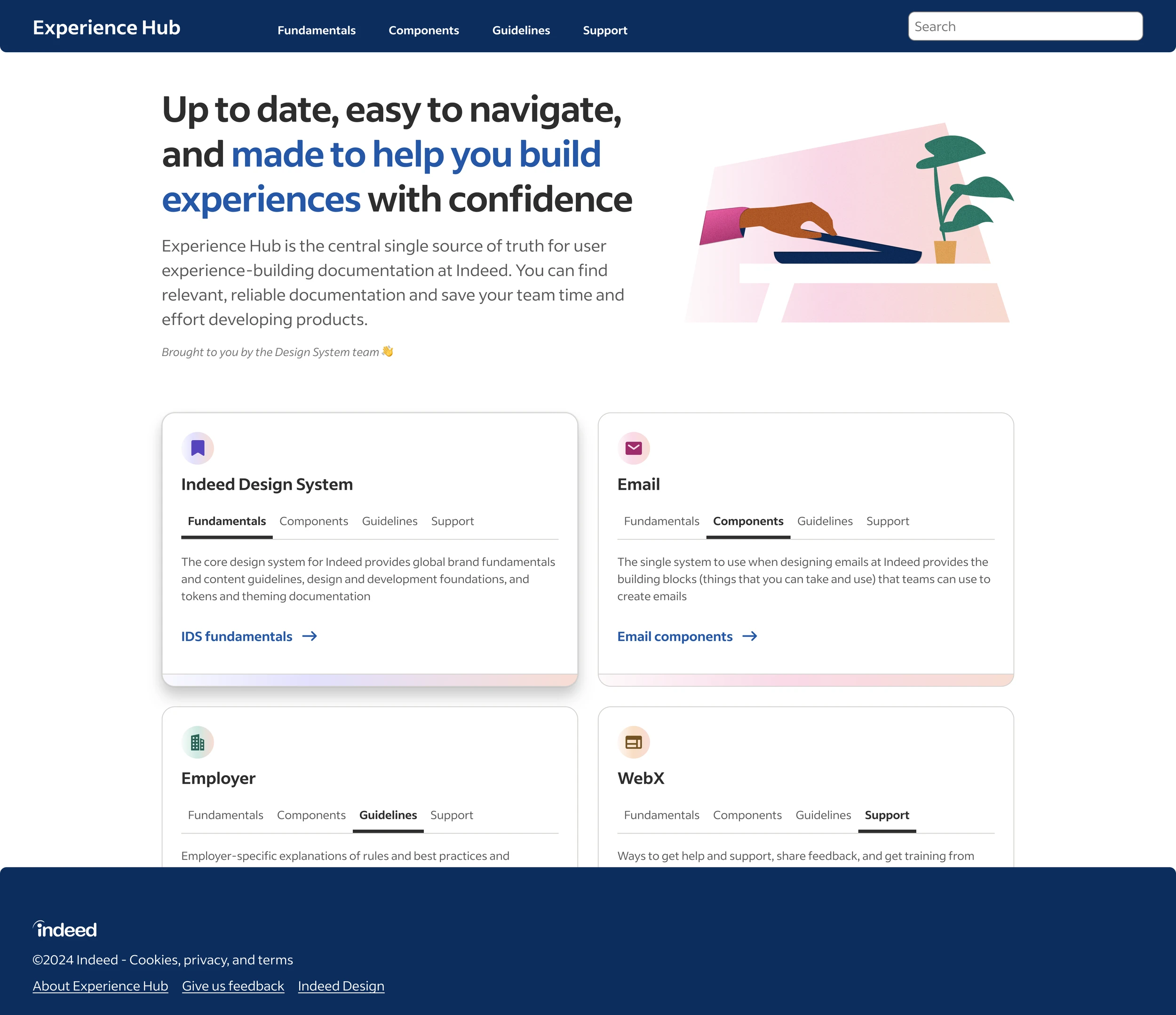
When I saw teams struggling with scattered design guidelines, I initiated a project to consolidate all UX documentation into one platform we called Experience Hub. This included design system components, product patterns, accessibility standards, and UX engineering resources.
PROBLEMS TO SOLVE
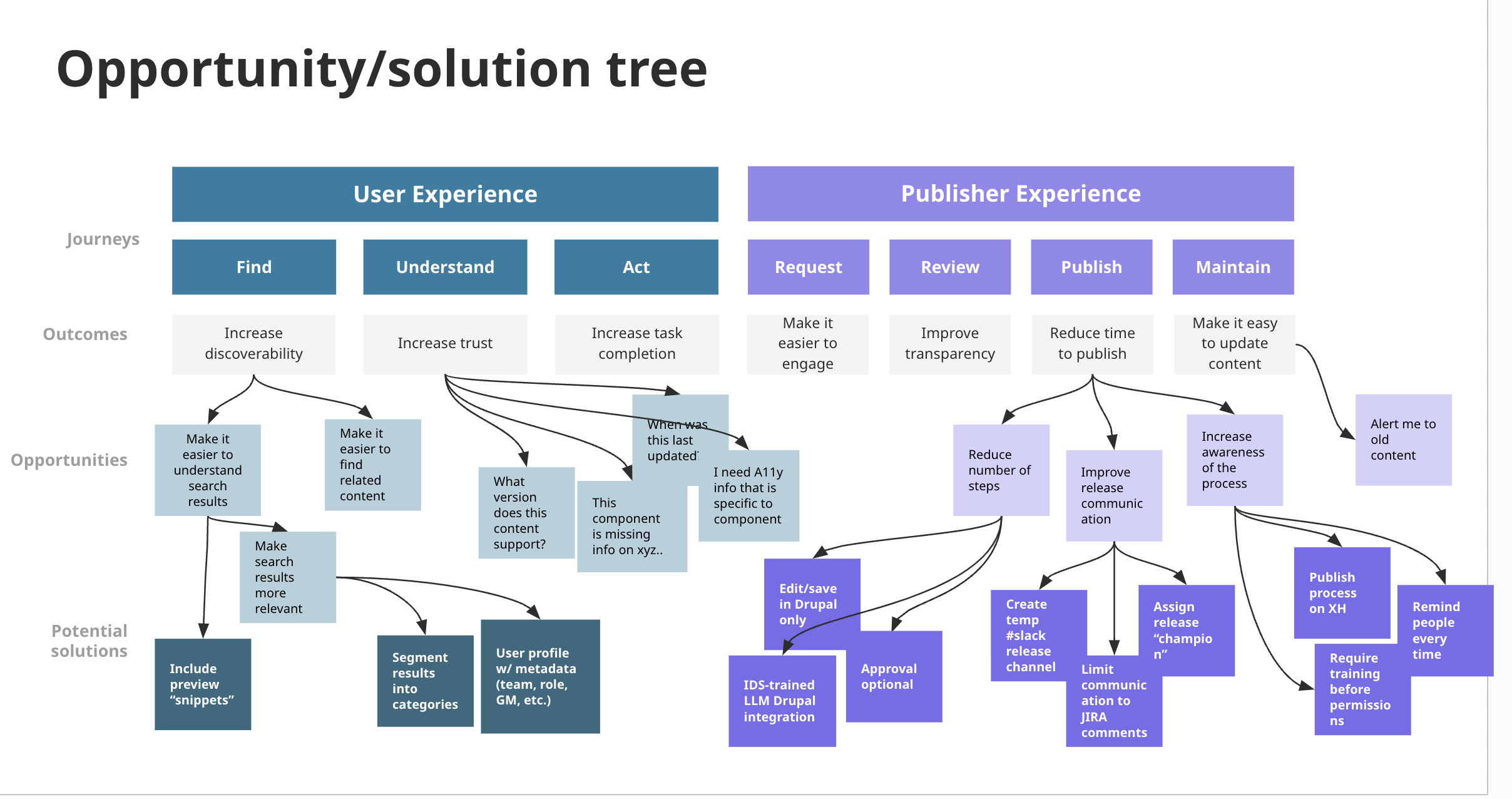
Design system components were well-documented, but product-level guidance was fragmented across Google Docs, Confluence, and Markdown files. Designers and engineers struggled to find authoritative answers—wasting time searching multiple sources and implementing patterns inconsistently when they couldn't find clear guidance.
Time wasted = expensive for the business
Inconsistent pattern usage = tech debt = time wasted
OPPORTUNITY
“How might we ensure product teams can quickly find current, authoritative guidance for building consistent experiences?”
VISION
I guided my design system team in building Experience Hub, a platform that fundamentally changed how Indeed approached design documentation. Rather than centralizing all knowledge creation, we built infrastructure that welcomed contributions.
Product teams could publish specialized guidance while we maintained foundational design system documentation. This vision transformed us from content creators to platform stewards, amplifying our impact across the organization.
STRATEGY
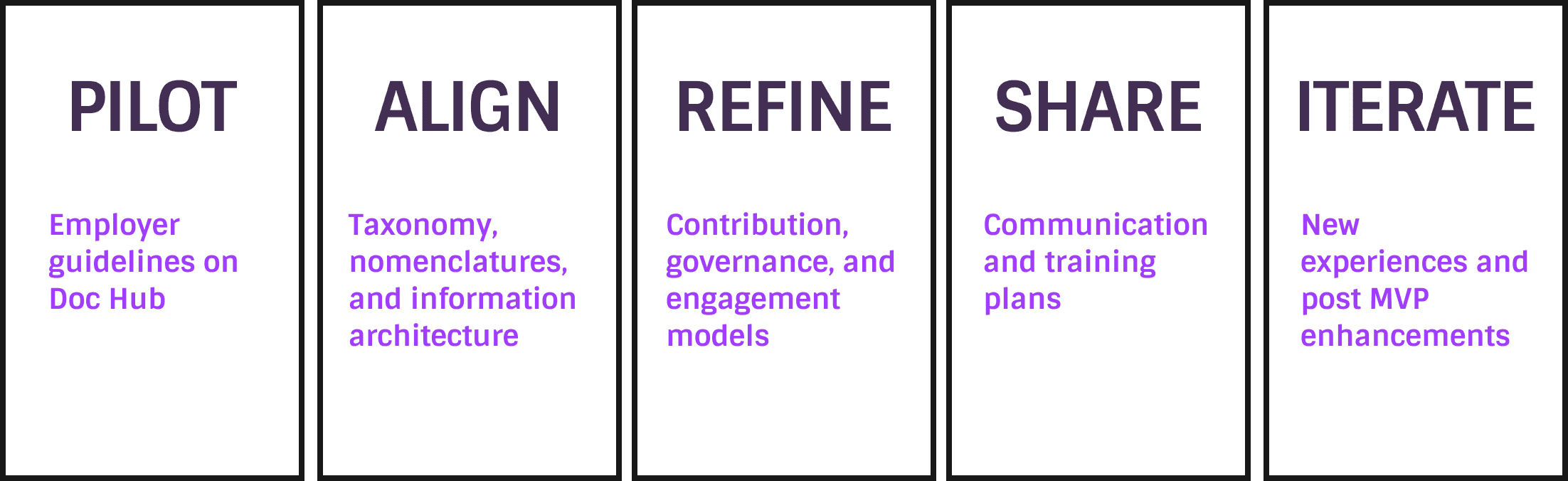
We broke down the transformation into five phases with clear deliverables: Pilot (validate approach), Align (stakeholder buy-in), Refine (optimize structure), Share (launch and communicate), and Iterate (continuous improvement). Each phase had dedicated project briefs that defined scope, timelines, and success metrics.
PILOT
Objective: Release a prototype and validate this as a solution.
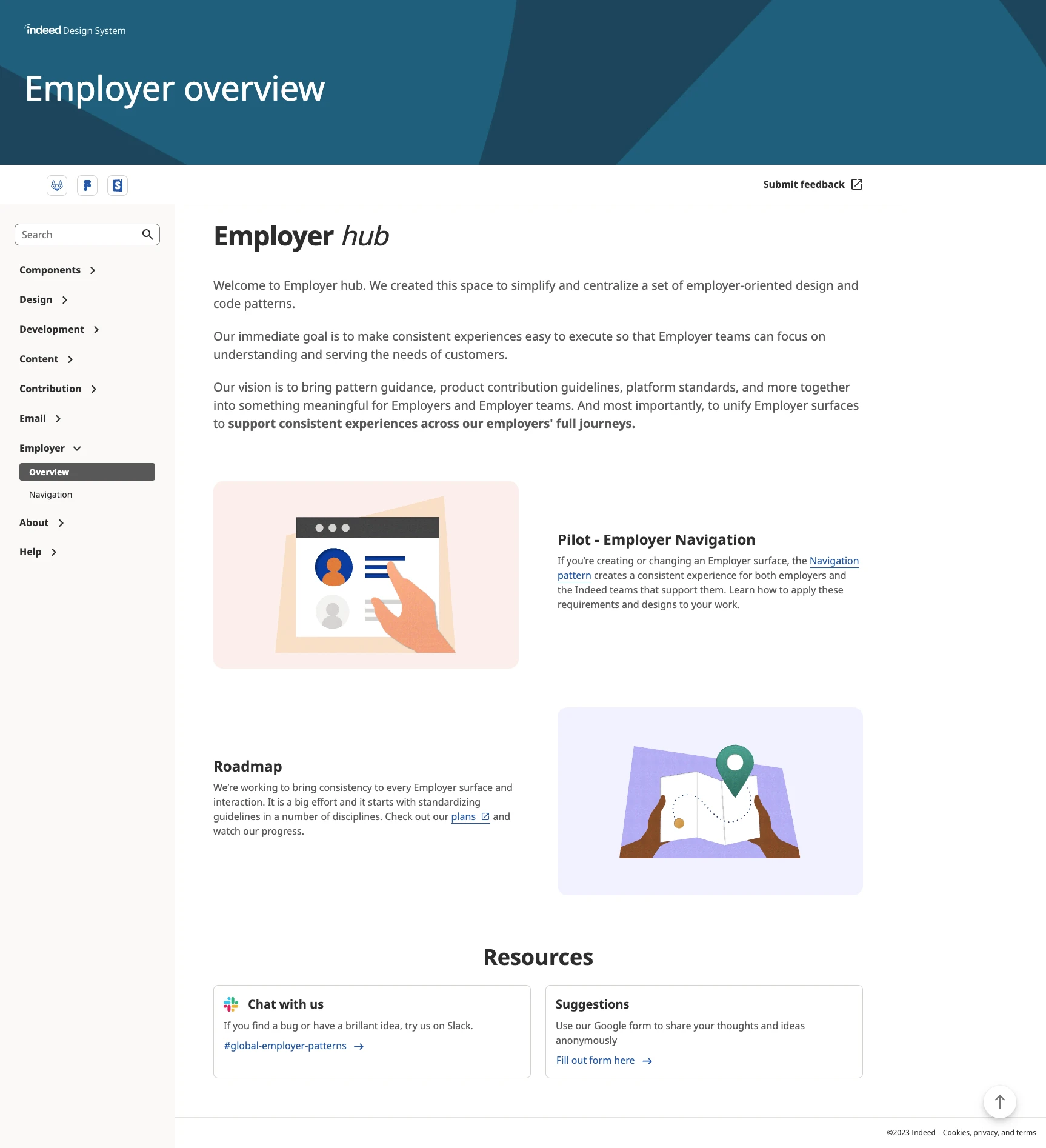
We launched Employer Hub with the first set of employer-specific guidelines to validate the platform approach and gather feedback from product teams. The pilot confirmed demand and revealed critical improvements needed for information architecture and contribution workflows.
ALIGN
Objective: Get buy-in from our stakeholders and future power users.
Conducted research with 80+ participants (card sorts, competitive analysis, stakeholder interviews) revealing misalignment between our site structure and user mental models. Refactored taxonomy and added more intelligent search capabilities that reflected how teams actually looked for guidance.
REFINE
Objective: Streamline content contribution, governance, and support processes.
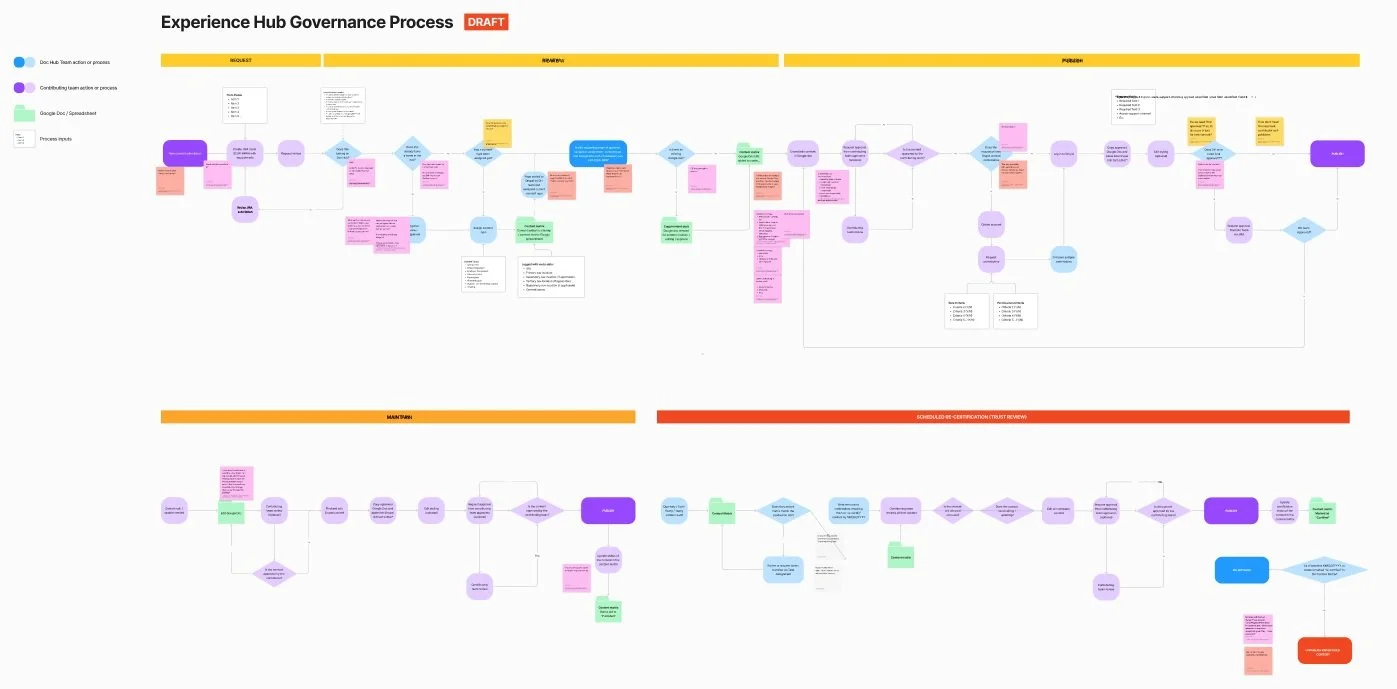
Result: Established contribution workflows, governance roles, and support processes that let product teams publish their own guidelines while maintaining quality standards.
SHARE
Objective: Develop and implement a communication and training plan.
Produced a comprehensive communication plan and training materials, ensuring product teams were well-informed and equipped to adopt the new processes. This proactive engagement led to a smooth transition and widespread acceptance of the new platform.
ITERATE
Objective: Post-launch optimizations.
Iterated on the platform based on user feedback, making necessary adjustments to enhance functionality. Our scalable architecture allowed us to incorporate the Web Experience (WebX) component library and guidance. We started planning discussions with the Job Seeker UX organization and the Mobile App team to incorporate product and platform-specific guidance, ensuring the platform remained relevant and useful across different domains.
SOLUTION
My team consolidated fragmented guidelines into a single platform with clear taxonomy, product-specific content, team contribution workflows, and AI-powered search using Indeed's MCP. The platform launched with comprehensive Employer documentation and positioned for expansion into Job Seeker, Marketing, and our Native Mobile Design System libraries.
IMPACT
Impact
Reduced UI bugs by 48% and generated immediate positive feedback from product teams in Slack channels.
Measurement infrastructure:
Established baseline with two User Experience Questionnaire studies conducted prior to launch
Created dedicated support channels and JIRA workflows to track issues
Designed post-launch survey to measure CSAT, task completion rate, and effort score
Future roadmap
Began discussions with our Mobile Design System and Job Seeker teams to expand platform coverage.